
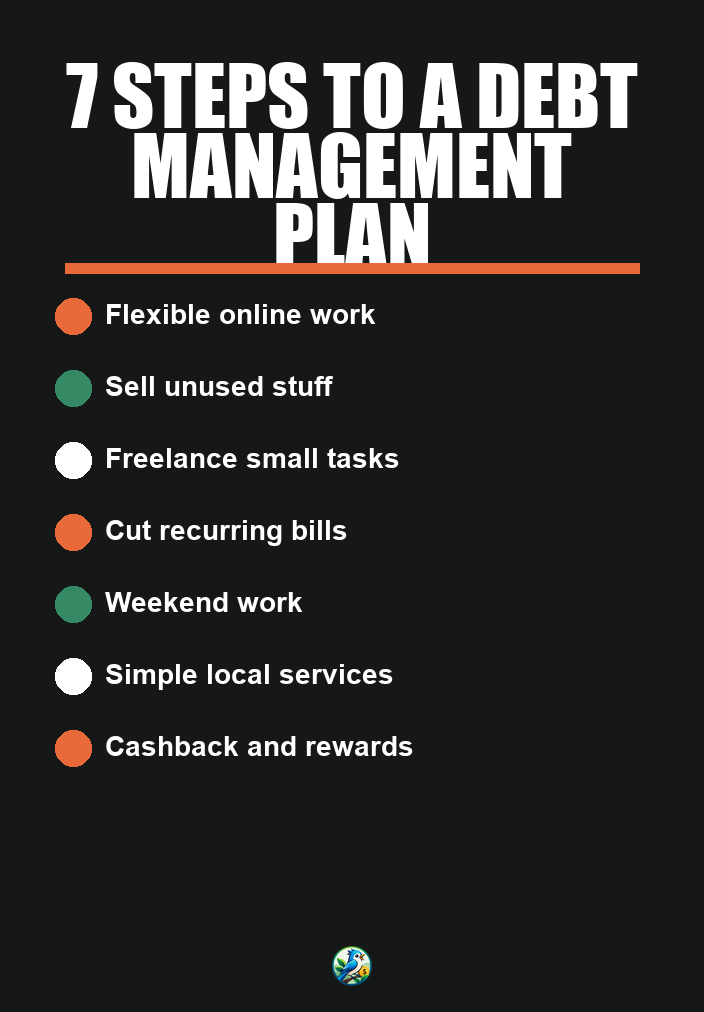
Understanding Your Debt Situation
Before you can create an effective debt management plan, you need to understand your current financial situation. Start by gathering all your financial information in one place. This includes your income, expenses, debts, and any other financial obligations.
List Your Debts
Begin by creating a detailed list of all your debts. Include the following information for each debt:
- Creditor name
- Total amount owed
- Monthly payment
- Interest rate
This will give you a clear picture of how much you owe and to whom, allowing you to prioritize your repayment efforts.
Assess Your Income and Expenses
Next, calculate your monthly income and expenses. Make a list of all sources of income, including salaries, side gigs, and any other revenue. Then, note your monthly expenses, breaking them down into fixed (like rent, utilities) and variable (like groceries, entertainment) costs.
Creating Your Debt Management Plan
With a clear understanding of your debts and overall financial situation, you can now develop a personalized debt management plan. Here’s a step-by-step process to guide you through.
Step 1: Set a Budget
Create a realistic budget that allows you to manage your essential expenses while allocating funds for debt repayment. Consider using the 50/30/20 rule as a guideline:
- 50% of your income for needs (housing, food, transportation)
- 30% for wants (entertainment, dining out)
- 20% for savings and debt repayment
Adjust these percentages based on your specific financial goals and circumstances.
Step 2: Choose a Debt Repayment Strategy
There are several strategies to choose from when it comes to repaying debt. Here are two popular methods:
- Snowball Method: Focus on paying off your smallest debt first while making minimum payments on the others. Once the smallest debt is paid off, move to the next smallest. This method provides psychological wins that can motivate you to continue.
- avalanche Method: Pay off debts with the highest interest rates first while making minimum payments on the others. This strategy saves you more money in interest over time.
Choose the method that resonates best with you and fits your psychological needs for motivation.
Step 3: Negotiate with Creditors
Don’t hesitate to reach out to your creditors. Many are willing to negotiate lower interest rates or set up more manageable payment plans. Here’s how to approach them:
- Be honest about your financial situation.
- Ask if they can lower your interest rate or offer a temporary deferment.
- Inquire about alternative payment plans that fit your budget.
Be prepared to explain why you’re asking for help and have a clear plan to show how you will manage payments moving forward.
Step 4: Automate Payments
To avoid missed payments, consider setting up automatic payments for your debts. This ensures you never forget a due date and helps maintain your credit score. Just be sure to have enough funds in your account to cover the payments.
Step 5: Monitor Progress and Adjust as Needed
Your debt management plan should be flexible. Regularly review your budget and debt repayment progress, and adjust your plan as needed. Here’s how:
- Set monthly check-ins to review your budget and expenses.
- Adjust your repayment strategy if you find one method isn’t working for you.
- Celebrate milestones, such as paying off a debt or reaching a savings goal.
Tips for Staying on Track
Sticking to a debt management plan takes discipline and motivation. Here are some practical tips to help you stay on track:
- Accountability: Share your goals with a trusted friend or family member who can help keep you accountable.
- Limit Unnecessary Spending: Avoid impulse purchases by setting spending limits for non-essential items.
- Focus on Financial Education: Continuously educate yourself on personal finance topics to make informed decisions.
Next Steps
Creating a debt management plan can seem daunting, but breaking it down into manageable steps makes it achievable. Start with understanding your financial situation, set a budget, choose a repayment strategy, negotiate with creditors, automate payments, and continually monitor your progress.
By implementing these strategies, you can take control of your debt and work towards a more secure financial future. Remember, the journey to becoming debt-free is a marathon, not a sprint. Stay committed, and you’ll see results over time.



















