
Understanding the Balance Between Savings and Debt Payoff
When looking to improve your financial health, one of the biggest challenges is figuring out how to balance savings with effective debt repayment. Many people find themselves in a cycle where they either focus solely on saving money or aggressively paying off debt, often neglecting the other. The truth is, managing both simultaneously can be an effective strategy for building a secure financial future. Here, we’ll explore practical ideas to help you strike that balance.
Assess Your Financial Situation
Before diving into specific strategies, it’s crucial to understand where you currently stand financially. Start by evaluating your debts and savings.
1. List Your Debts
- Make a comprehensive list of all your debts, including credit cards, student loans, car loans, and any personal loans.
- Note the interest rates, minimum monthly payments, and total balances for each.
2. Calculate Your Savings
- Determine how much money you have saved across different accounts—emergency fund, retirement accounts, and any other savings.
- Assess your monthly contributions to these savings.
Set Clear Financial Goals
With a clear picture of your debts and savings, it’s time to establish your financial goals. Ask yourself what you want to achieve. Do you want to be debt-free in a certain timeframe? Or do you need to build an emergency fund first? Here are some examples of goals you might consider:
- Pay off high-interest debt within 12 months.
- Build an emergency fund covering 3-6 months of expenses.
- Save for a significant purchase, like a home or vehicle.
Determine Your Budget
Your budget is the foundation for balancing savings and debt repayment. Start by tracking your income and expenses to gain insights into your spending habits.
1. Create a Monthly Budget
- List your sources of income, including salaries, side hustles, or other earnings.
- Document fixed expenses (rent, utilities, etc.) and variable expenses (food, entertainment, etc.).
2. Apply the 50/30/20 Rule
A practical budgeting guideline is the 50/30/20 rule:
- 50% of your income goes to needs (housing, food, transportation).
- 30% goes to wants (dining out, hobbies, entertainment).
- 20% goes to savings and debt repayment combined.
You can adjust these percentages based on your specific situation, especially if you have high-interest debt that needs aggressive repayment.
Prioritize High-Interest Debt
When it comes to paying off debt, prioritizing high-interest accounts can save you money in the long run. Here’s how to tackle it:
1. Focus on the Avalanche Method
Using the avalanche method, you allocate extra payments to the debt with the highest interest rate first while making minimum payments on other debts. This approach saves you money on interest over time.
2. Consider the Snowball Method
Alternatively, some people prefer the snowball method, where you focus on the smallest debts first. Paying off smaller debts can provide psychological boosts and motivate you to continue.
Establish an Emergency Fund
While paying off debt is crucial, having an emergency fund is equally important. This fund can prevent you from accumulating more debt in case of unexpected expenses.
1. Aim for Initial Savings
Start by aiming for $500 to $1,000 as a small emergency fund. This amount can cover minor emergencies and prevent you from using credit cards for unexpected expenses.
2. Build Up Gradually
Once you have your initial fund, aim to grow it to cover 3-6 months of living expenses. Set aside a portion of your budget each month to gradually build this fund.
Automate Your Savings and Payments
Automation can make managing your finances easier and more effective. Here’s how to implement automation:
- Set up automatic transfers from your checking account to your savings account every payday.
- Automate debt payments to ensure you never miss a payment, which can help improve your credit score.
Evaluate and Adjust Regularly
Your financial situation can change, so it’s vital to evaluate your progress regularly. Schedule a monthly review to assess your budget and adjust your strategies as needed.
1. Track Your Progress
- Keep an eye on your debt balances and savings growth.
- Celebrate small wins to keep yourself motivated.
2. Revisit Your Goals
If you find that your initial goals are no longer relevant or achievable, adjust them. Life changes, and so should your financial strategies.
Consider Additional Income Sources
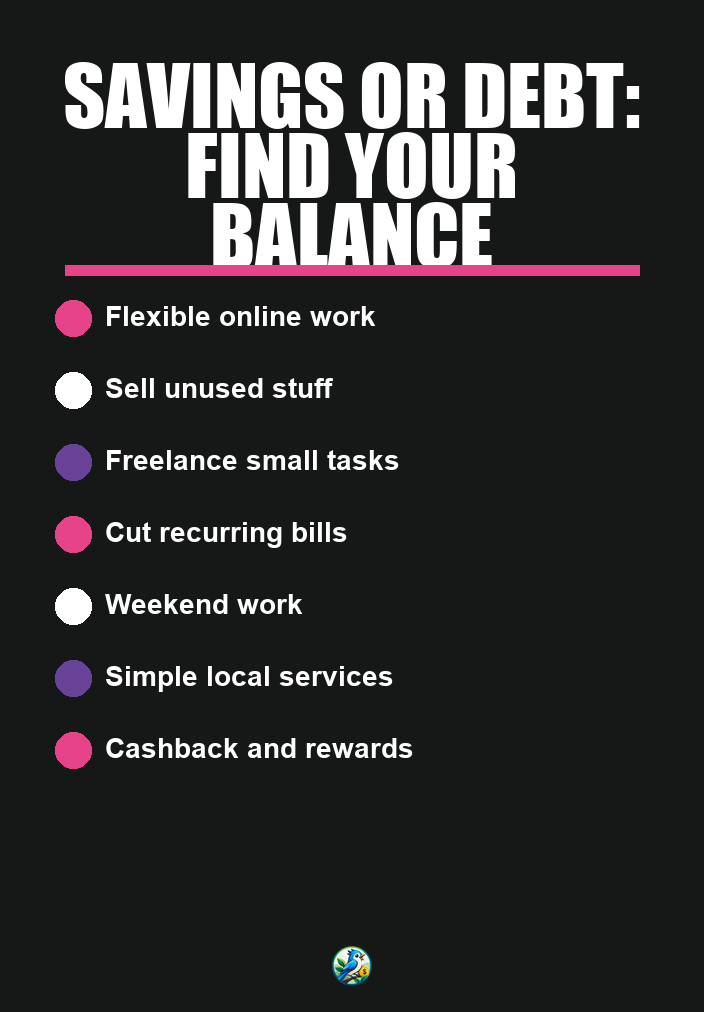
If you’re struggling to balance savings and debt repayment with your current income, consider exploring additional income sources. Here are a few ideas:
- Take on a part-time job or freelance work.
- Sell items you no longer need or use.
- Participate in online surveys or focus groups for extra cash.
Next Steps to Balance Savings and Debt Payoff
Balancing savings with debt repayment is a journey, not a sprint. Start by assessing your financial situation, setting clear goals, and creating a budget that reflects those goals. Prioritize high-interest debt while gradually building an emergency fund. Automate your payments and savings to simplify your efforts, and regularly review your progress to stay on track.
Remember, it’s about finding a balance that works for you. Take small, actionable steps, and over time, you’ll be able to achieve both strong savings and effective debt management.



















